
Reviews
Platform Leap Challenge stands out for its responsive controls and thoughtful course design. The game avoids unnecessary complexity, letting players focus on timing and precision. Courses start simple but gradually introduce moving platforms and narrow ledges, keeping the challenge steady without feeling unfair. The multiplayer mode adds a nice social layer, allowing friends to race through courses together. The bright, clean visuals make it easy to read each platform's position, which helps reduce frustration. For a free browser game, it delivers a polished experience that respects the player's time and skill.
About this game
Core Movement Mechanics
In Platform Leap Challenge, players control a character using standard keyboard inputs like the arrow keys or WASD to move in four directions. The spacebar triggers jumps, which are essential for crossing gaps and landing on platforms. Success depends on timing each jump carefully, especially when platforms shift or rotate. The controls respond quickly, allowing for fluid movement once players become familiar with the character's momentum. Each course introduces new arrangements of platforms, requiring players to adjust their approach on the fly.
Course Design and Variety
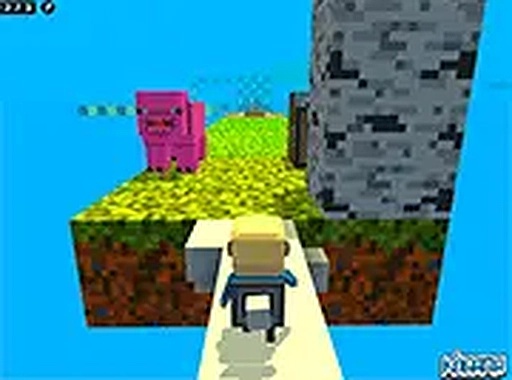
The game presents a series of courses, each with a distinct layout of platforms and obstacles. Early levels focus on basic jumps and wide gaps, while later stages incorporate moving platforms that change position over time. Some courses feature narrow ledges that demand precise landings, while others include platforms that disappear after a short time. This variety keeps the experience fresh and encourages players to develop better timing and spatial awareness. The visual style remains colorful and clear throughout, making it easy to distinguish platforms from empty space.
Accessibility and Visual Style
Platform Leap Challenge uses bright, simple graphics that are easy on the eyes. The character and platforms stand out against the background, helping players focus on the action. The game is designed to be approachable for newcomers, with no complex menus or tutorials. The straightforward visual language means players can quickly understand what to do without reading lengthy instructions. This makes the game a good choice for casual play sessions or for introducing younger players to platforming games.
Multiplayer and Social Features
The game includes a multiplayer mode that allows players to compete or cooperate with friends in real time. In this mode, participants navigate the same course simultaneously, adding a layer of social interaction. Players can see each other's progress, which can motivate them to improve their own performance. The multiplayer aspect turns individual practice into a shared experience, making it easier to learn from others and enjoy the game together. This feature is optional, so players who prefer solo play can still enjoy the full set of courses.
Progression and Skill Development
As players complete courses, they naturally improve their reflexes and timing. The game does not rely on complex scoring systems or power-ups, instead focusing on the core challenge of navigating each course. This straightforward progression means that improvement comes from practice rather than luck. Players who invest time will notice their ability to handle tricky sections improving over time. The lack of external rewards keeps the focus on the satisfaction of mastering each course.




Comments
Sign in to leave a review
No account? Create one
No comments yet.