
Reviews
Cosmic Rock Breaker Arcade captures the essence of early space shooters with its straightforward mechanics and escalating challenge. The inertia-based movement requires deliberate control, making each session feel distinct. Visuals are minimal but effective, with clear shapes against a dark background. The lack of power-ups keeps the focus on player skill. Rounds are short, making it ideal for quick play. The only downside is the absence of any progression or variety, but for fans of pure arcade action, this is a well-executed tribute.
About this game
Core Game Loop
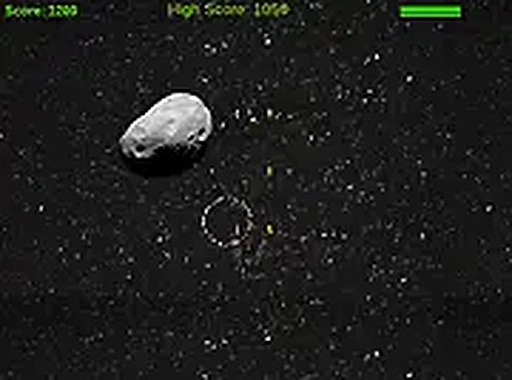
Players take command of a triangular spacecraft navigating a two-dimensional field filled with irregularly shaped floating rocks. The primary objective involves shooting these objects until they break apart into smaller fragments. Each successful hit on a large rock produces two or three smaller pieces that move faster and in unpredictable directions. This creates a layered challenge where clearing the screen requires both accurate shooting and careful positioning. The game ends when any fragment makes contact with the ship, so constant movement and awareness are essential.
Control Scheme & Responsiveness
The spacecraft responds to keyboard inputs for rotation, thrust, and firing. A single button rotates the ship left or right, another activates forward momentum, and a third fires projectiles. The ship moves with inertia, meaning it continues drifting in a direction after thrust stops. This physics-based movement adds a layer of precision to every action. Players must learn to counteract momentum while aiming at fast-moving fragments. The controls feel immediate and allow for quick adjustments, which is important when multiple small rocks close in from different angles.
Visual & Audio Presentation
The visual style uses simple geometric shapes against a dark starfield background. Rocks appear as jagged polygons with subtle shading, and the ship is a clean white triangle. Explosions are represented by brief particle effects without any graphic detail. The audio consists of basic electronic tones that signal shots, impacts, and the splitting of rocks. This minimalist approach keeps the focus on gameplay and avoids unnecessary visual clutter. The full screen mode expands the view without changing the core aesthetic, making it easier to track objects at the edges of the playing field.
Difficulty Progression
Each round begins with a set number of large rocks spread across the screen. As the player clears them, the game may introduce new rocks at the edges or increase the speed of existing fragments. The pace gradually intensifies, requiring faster decision-making and more precise control. There are no power-ups or shields, so every collision ends the round. This straightforward difficulty curve rewards practice and pattern recognition. Players who learn to prioritize larger rocks and maintain steady movement tend to survive longer.
Session Structure & Accessibility
Rounds are short, typically lasting a few minutes for new players and longer for experienced ones. The game is designed for desktop browsers and requires no installation. It loads quickly and runs smoothly on most modern systems. There is no save feature or progression system, so each session starts fresh. This makes it suitable for quick breaks or extended play sessions. The lack of monetization or ads during gameplay ensures an uninterrupted experience. All ages can play, as the content involves only abstract shapes and no violent imagery.








Comments
Sign in to leave a review
No account? Create one
No comments yet.