
Reviews
Arrow Grid Tile Placer focuses on one clear rule: cover the grid exactly once using blocks whose arrows fill adjacent cells. The lack of timers and the ability to undo placements make it forgiving for newcomers, while larger grids and complex arrow patterns provide a genuine challenge for experienced puzzle players. Its minimal visual style keeps attention on the board. Best suited for players who enjoy thoughtful, low-pressure problem-solving rather than fast-paced action.
About this game
The Core Mechanic
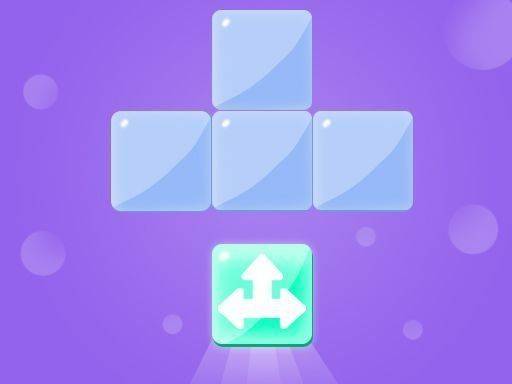
Arrow Grid Tile Placer strips puzzle design down to a single rule: fill every empty cell on the grid exactly once. You receive blocks, each printed with arrows pointing to adjacent cells. Placing a block fills those indicated cells. The challenge is that no two blocks can overlap, and no cell can be left empty. That one constraint creates a cascade of decisions where an early placement can either open up the board or quietly make the rest unsolvable.
Placement and Experimentation
To place a block, you tap or click it, then drag it onto a target cell. The arrows preview which neighboring cells will be filled, so you can see the immediate effect before committing. If a placement turns out wrong, you can remove the block and try again. There is no penalty for undoing, which turns the game into a low-pressure testing ground for spatial hypotheses. You learn by seeing what breaks.
Difficulty Progression
Puzzles begin with small grids and simple block shapes, then expand into larger layouts with more complex arrow patterns. The early levels teach you to read arrows and count remaining cells. Later puzzles demand that you think several moves ahead, because each placement shrinks the available space in ways that are not always obvious. The difficulty curve stays gradual enough that new players can learn the rules without frustration, while experienced puzzle players still find boards that require real planning.
Design and Pace
The interface uses bright, clean colors and a minimal layout that keeps attention on the grid. Blocks are visually distinct, and the board stays uncluttered even as it fills. There are no timers or score counters, so you can work at your own pace. That relaxed structure makes the game suitable for short breaks or longer sessions, and it means the only pressure comes from the puzzle itself.
Compatibility
FAQ
Comments
Sign in to leave a review
No comments yet.








Editorial Notes